





Laser welding solutions for the automotive industry
 Home
HomeThe core of laser welding solutions in the automotive industry revolves around three major scenarios: body-in-white, new energy three electrics, and chassis/safety components. It utilizes fiber/blue laser + robot + vision system to replace traditional spot welding/arc welding, achieving high-precision, high-efficiency, and low-cost connection of high-strength steel/aluminum/dissimilar materials, while meeting the requirements of lightweight, high safety, and long lifespan. The following will expand on technical advantages, core scenarios, equipment selection, process plans, cases, and trends.
1. Core Advantages (Compared to Traditional Welding)
High precision and minimal deformation: spot size 0.1–0.3mm, heat-affected zone 0.1–0.3mm, dimensional tolerance ±0.5mm, with almost no deformation in thin-walled parts.
High strength and good sealing: The weld strength reaches 90%–95% of the base material, the air tightness of continuous welds is improved by 40%, the wind noise is reduced by 3–5dB, and the waterproof rubber strip can be eliminated.
High efficiency and fast cycle time: Welding speed of 3–12m/min, which is 3–5 times faster than traditional spot welding; production line cycle time of 43–60 seconds per vehicle, with a yield rate of 99.8%+.
Wide material compatibility: Capable of welding high-strength steel (1500MPa), aluminum alloy, galvanized sheet, and steel-aluminum dissimilar materials, suitable for lightweight applications.
Cost-effective and environmentally friendly with low energy consumption: Reducing auxiliary materials and polishing processes leads to a 15%-20% reduction in per-vehicle cost; dust emissions are reduced by over 80%, and energy consumption is even lower.
Floor panel / Door / Anti-collision beam: Fiber laser welding, aspect ratio 10:1, stable welding of 1500MPa high-strength steel.
Tailor Welded Blanks (TWBs): Stamping of plates of different thicknesses/materials after tailor welding, used for B-pillars, floor panels, with a weight reduction of 10%–15%.
2. Welding in new energy and three electrics (with the fastest growth)
Battery Pack / Tray: **Blue Laser (450nm)** welded aluminum alloy (6061/5052), with weld precision of 0.01mm, helium leak detection rate of ≤1×10⁻⁹ Pa・m³/s, and a heat-affected zone 60% smaller than traditional welding.
- II. Three core application scenarios
1. Body-in-white welding (the most mature)
Roof/side panels/door frames: Laser brazing (0.8–1.5mm weld seam), adopted by Volkswagen ID.4 and Audi A8, enhancing vehicle body rigidity by 30%–50%.


Motor / Electronic Control: The stator welding of the card dispensing motor and the copper bar connection exhibit a small heat-affected zone with no damage to the insulation layer.
3. Chassis / Safety / Precision Components
Chassis: subframe, shock tower, steering knuckle, welded with high-strength steel/aluminum alloy, featuring high strength and long fatigue life.
Safety components: Airbag panel laser weakening (precisely controlling the remaining thickness to 0.3–0.5mm), bumper/energy absorber box integrated stamping and welding.
- Laser welding of car battery trays
- Precision components: sensor brackets, ECU housings, transmission gears, with micron-level precision, requiring no grinding after welding.

III. Standard solution architecture (taking Dainai Laser as an example)
1. Equipment selection (by scenario)
Body-in-white: Fiber laser (3–6kW, 1064nm) + six-axis robot + 3D vision + weld seam tracking, with a speed of 4–6m/min.
Battery pack: Blue laser (2–4kW, 450nm) + galvanometer scanning + dual workstations, with a cycle time of 45 seconds per tray.
Precision components: Pulsed fiber/semiconductor laser (500–1500W) + precision platform + CCD positioning, with an accuracy of ±0.02mm.
2. Production line configuration
Workstation: Robot + Laser Head + Fixture + Loading/Unloading AGV + Dust Removal System.
Automation: 3D visual positioning (compensating for ±0.5mm deviation), weld seam tracking, online inspection (AI vision/infrared), data traceability.
Safety: fully enclosed protection, laser safety interlock, and smoke and dust purification.
3. Process parameters (for reference)
Top cover brazing: Power 3.5kW, speed 5m/min, spot size 0.8mm, wire feed 1.2mm (copper-silicon welding wire).
Battery tray welding: Blue light 3kW, speed 3m/min, focal length 250mm, shielding gas 99.99% argon.
High-strength steel fusion welding: fiber 6kW, speed 8m/min, aspect ratio 10:1, no porosity or cracks.
IV. Typical Cases
Dine Laser - Body-in-White (BIW) Line of a Joint Venture Automobile Company: 12 fiber laser workstations, full laser welding for roof/side panels/doors, body rigidity increased by 40%, cost per vehicle reduced by 17%, with a takt time of 45 seconds per vehicle.
"Dinai Laser - Battery Pack Production Line for a New Energy Vehicle Company: Blue laser dual-station production line, 6061 aluminum alloy tray, weld seam precision of 0.01mm, helium leak detection pass rate of 100%, cycle time of 40 seconds per unit.".
Volkswagen ID.4: laser welding of the roof, with a weld width of 0.8mm, a drag coefficient reduced by -0.02, a weight reduction of 5kg, and the elimination of the roof rubber strip.
V. Development Trends
AI + Laser: AI vision real-time correction, adaptive power adjustment, intelligent defect recognition, achieving a yield rate of up to 99.95%+.
Ultra-high speed welding: optical shutter time-division multiplexing (single laser with dual stations), galvanometer scanning, achieving speeds of 10–15m/min.
Deepening of lightweight materials: Dissimilar welding of steel and aluminum, aluminum-lithium alloy, and carbon fiber composite connections, contributing to a 10%-20% reduction in vehicle weight.
Green and low-carbon: low-energy lasers, closed-loop treatment of smoke and dust, and waste recycling, all of which meet the requirements of carbon neutrality.
VI. Differential Advantages of Dine Laser
Full-scenario coverage: Comprehensive solutions for body-in-white, powertrain, chassis, and safety components, suitable for both fuel-powered and new energy vehicle models.
Self-developed core components: fiber/blue laser, laser head, weld tracking system, high cost-effectiveness, fast after-sales response.
Customized production line: Tailored according to production capacity (100,000–600,000 vehicles/year), vehicle model (A0–D class), and material (steel/aluminum/dissimilar), with a short delivery cycle.
One-stop service: full-process support for process development, equipment manufacturing, installation and commissioning, personnel training, and after-sales maintenance.
Popular Products
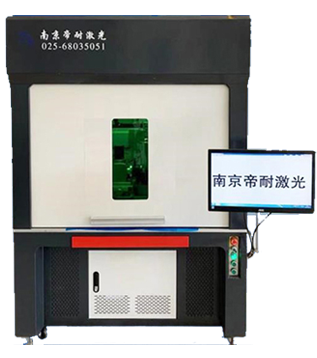
Automobile manufacturing field
Trajectory laser welding plastic machine22
Learn more
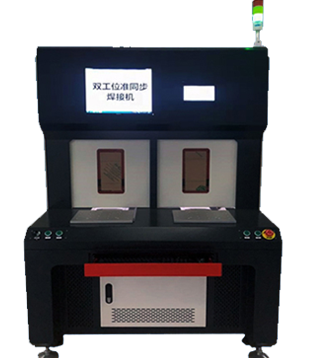
Automobile manufacturing field
Quasi synchronous laser welding plastic machine22
Learn more
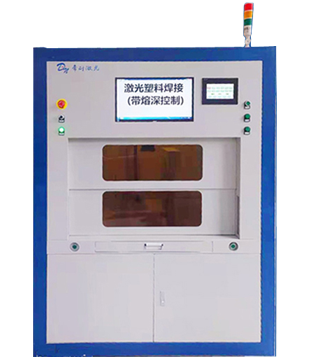
Automobile manufacturing field
Deep penetration laser plastic welding equipment22
Learn more
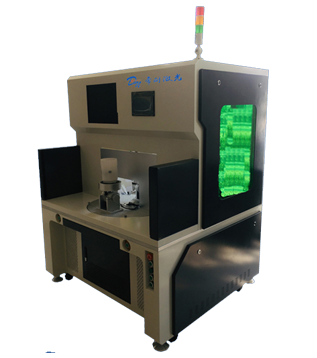
Automobile manufacturing field
Cylindrical plastic laser welding machine22
Learn more
Automobile manufacturing field
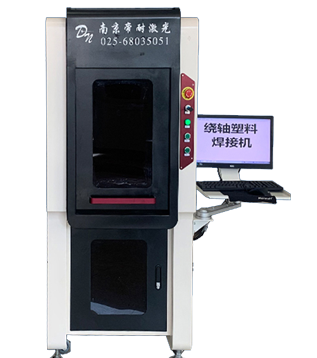
Laser axial plastic welding machine22
Learn more
Automobile manufacturing field
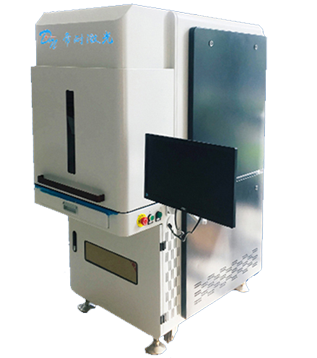
Transparent material plastic welding machine22
Learn more