




Laser welding and cutting solutions in the medical device industry
 Home
Home The core of laser welding and cutting in the medical device industry is precision, cleanliness, low thermal damage, and airtightness/sterility. It has been widely used in implants, interventional instruments, surgical tools, IVDs, and precision structural components. Below, we will discuss the requirements, solutions, typical applications, equipment selection, and key process points, taking into account both implementation and compliance.
1、 Core Industry Needs and Pain Points
Medical devices have much higher processing requirements than ordinary industries:
High precision: micrometer scale size and positioning, with tolerances of ± 10-50 μ m for micro components such as brackets, conduits, and electrodes.
Biocompatibility: No burrs, no thermal damage, no pollution, avoiding coating damage and thrombus risk.
High airtightness/sealing: The implanted casing (pacemaker, nerve stimulator) requires helium testing to ensure no leakage and meet ISO 14708 standards.
Clean and sterile: The process is free of welding slag and adhesive residue, and can be completed in a clean room.
Wide material compatibility: 316L, nickel titanium alloy, titanium alloy PEEK、TPU、PI、 Difficult to process materials such as zirconia.
Traditional processes (argon arc, spot welding, mechanical cutting) are prone to deformation, have significant thermal effects, and lack cleanliness, making laser the optimal solution.
2、 Laser Welding Solution (Medical Grade)
1. Core technology roadmap (by cleanliness/sealing level)
Glove box laser welding (highest cleanliness)
The sealed box is filled with high-purity argon and water oxygen<10ppm to prevent oxidation and blackening of titanium/tantalum/zirconium alloys.
Applicable: titanium shell for pacemakers, orthopedic implants, dental implants, cochlear implants.
Vacuum laser welding (ultra-high airtightness)
The chamber is pumped to 10 ⁻⁸ Pa to suppress splashing and oxidation, and the purity of the weld seam is extremely high.
Applicable: Implantable electronic packaging, microwave medical sensors, high reliability seals.
QCW quasi continuous fiber laser (precision thermal control)
High peak value, low heat input, adjustable pulse, suitable for thin-walled (0.2-0.5mm) and heterogeneous materials.
Applicable: catheter connectors, guide wires, minimally invasive forceps, sensor housings.
Plastic laser welding (pollution-free seal)
Transmission/absorption pairing, low heat, no vibration, no glue, suitable for microfluidic chips and infusion pump components.
2. Typical application scenarios
Cardiovascular intervention: 316L/nickel titanium alloy catheter fittings, balloon components, stent markings; Microscopic visual localization, sub millimeter accuracy, without damaging the drug coating.
Implantable devices: titanium alloy pacemaker/nerve stimulator housing sealing and welding; The melting depth is controllable, airtight without leakage, and the weld seam is smooth without cracks.
Titanium alloy casing for cardiac pacemaker
Orthopedic implants: titanium alloy hip joints, spinal fusion devices, bone plates; High welding strength, long fatigue life, and good bone integration.
Titanium alloy hip joint
Minimally invasive surgical tools: laparoscopic forceps, biopsy forceps, electrocoagulation forceps; The joints are dense without pores and resistant to high-pressure disinfection.
Laparoscopic forceps
3、 Laser cutting solution (medical precision)
1. Core technology roadmap (by precision/material)
Ultraviolet femtosecond laser (cold processing, highest precision)
343nm/500fs pulse, direct gasification of material, no thermal effect, no burrs, and no carbonization.
Applicable: TPU microcatheter side hole, PI thin film electrode, nickel titanium stent, zirconia bone plate.
Infrared picosecond laser (for hard and brittle materials)
Ultra short pulse, suitable for zirconia and alumina ceramics PEEK, Heat affected zone<15 μ m.
Fiber laser (metal efficient)
High power, low cost, suitable for 316L and titanium alloy pipes/plates, used for rough machining of medical beds and brackets.
Fiber laser cutting machine
2. Typical application scenarios
Vascular stent: Made of 0.05mm nickel titanium foil with a 15 μ m line width sinusoidal structure, providing uniform radial support and reducing endothelial damage.
Microfluidic chip: PMMA/COC precision channel cutting, no overflow, no dust, suitable for IVD detection.
Neural intervention catheter: 1.5mm TPU tube wall with 40 μ m side hole array, Ra<0.8μm, Avoiding thrombosis, with a yield rate of 99.5%.
Neural intervention catheter
Implanted electrode: 25 μ m PI substrate with 40 μ m through-hole, heat affected zone<5 μ m, protective biological coating.
Implanted electrodes
4、 Key parameters for equipment selection (medical standards)
welding equipment
Light source: QCW fiber (preferred), continuous fiber, UV/femtosecond (high-end).
Power: 50-300W (precision), 500W+(thick parts).
Positioning: Visual coaxial+XY platform, accuracy ± 5 μ m.
Environment: Glove box (water oxygen<10ppm), vacuum chamber (10 ⁻⁴ -10 ⁻⁸ Pa), inert gas protection.
Weld seam: Ra<1.6 μ m, without cracks, pores, or oxidation color.
Cutting equipment
Light source: ultraviolet femtosecond (precision), infrared picosecond (hard and brittle), fiber optic (metal).
Accuracy: ± 5-20 μ m, heat affected zone<10 μ m.
Surface: Ra<0.8 μ m (implant), no burrs, no carbonization, no slag hanging.
Material: Compatible with 316L, nickel titanium, titanium PEEK、TPU、PI、 Zirconia.
5、 Key process points and compliance requirements
1. Key points of welding process
Titanium alloy: glove box+high-purity argon (99.999%), pulse parameter optimization for oxidation prevention.
Thin walled (0.2-0.5mm): QCW pulse, low power, high speed, anti breakdown and deformation.
Airtight components: vacuum welding+helium inspection, leakage rate<1 × 10 ⁻⁹ Pa · m ³/s.
2. Key points of cutting process
Femtosecond cold processing: No thermal damage, preferred for drug coatings, thin-walled, and soft materials.
Nickel titanium stent: UV femtosecond, line width of 15 μ m, uniform support force.
Microchannel: UV femtosecond, side hole Ra<0.8 μ m, yield>99%.
3. Compliance and Verification
Compliant with ISO 13485, ISO 14708, FDA 21 CFR.
Process validation: Weld strength, airtightness, biocompatibility, cleanliness testing.
Traceability: laser marking with unique identification, quality tracking throughout the entire process.
6、 Advantages of Di Nai Laser Medical Solution
Di Nai Laser is deeply involved in medical precision laser processing, providing a one-stop solution of equipment, process, and verification:
Our self-developed QCW/UV femtosecond light source is suitable for medical grade precision welding and cutting.
Customized glove box/vacuum welding system, with water and oxygen control up to ppm level, ensuring clean welding seams of active metals such as titanium alloys.
Medical exclusive process library: mature parameters such as stents, catheters, implants, microfluidics, etc., quickly implemented with a yield rate of>99%.
Compliant with ISO 13485, supports FDA/CE verification, and assists in global compliance for product launch.
7、 Summary
Laser welding and cutting are the core processes of high-end manufacturing of medical devices, which completely solve the pain points of traditional processes with precision, cleanliness, low heat damage, and high reliability. Di Nai Laser provides efficient and compliant solutions for fields such as implants, interventional instruments, surgical tools, IVD, etc. with self-developed light sources, customized systems, and medical grade process libraries, helping enterprises improve product quality and market competitiveness.
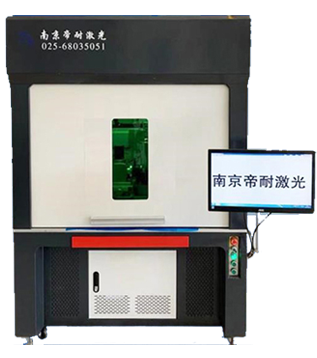
Trajectory laser welding plastic machine22
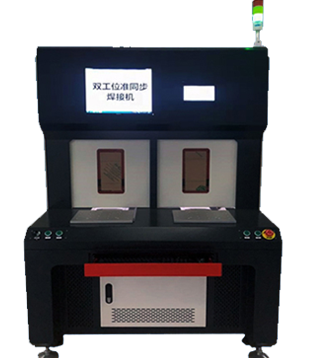
Quasi synchronous laser welding plastic machine22
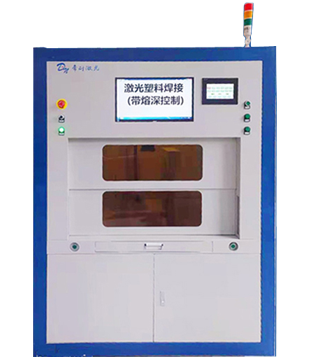
Deep penetration laser plastic welding equipment22
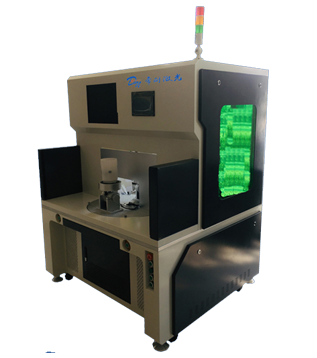
Cylindrical plastic laser welding machine22
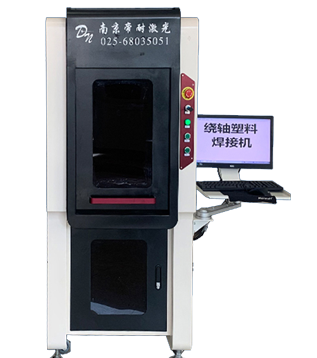
Laser axial plastic welding machine22