





Laser Welding Process Plan for the Timing Belt Cover of Automobile
 Home
HomeLaser Welding Process for the Timing Belt Cover of Automotive Air Intake
1、 Product working conditions and welding pain points
The timing belt cover of the car engine is divided into upper and lower plastic shells, with mainstream materials of PP+fiberglass and PA66+30% fiberglass, which belong to the peripheral protective parts of the engine. The core function is to isolate sediment, engine oil, and high-temperature water vapor, protect the internal timing belt and camshaft transmission structure, and withstand high-frequency engine vibrations during long-term service at temperatures ranging from -40 ℃ to 125 ℃. Traditional processes use ultrasonic welding and hot melt welding, which generally have three major defects: first, ultrasonic vibration cracks the thin-walled ribs of the shell, resulting in hidden cracks; Secondly, there is severe overflow during hot melt welding, resulting in deformation of the shell appearance and excessive assembly clearance; Thirdly, after alternating high and low temperatures, the weld seam cracks, leaks water and oil, and the after-sales failure rate remains high. In response to this issue, we adopt the Di Nai laser plastic transmission laser welding process, which matches the IATF16949 component quality inspection standard of the vehicle manufacturer, to achieve seamless, highly airtight, and vibration resistant mass production welding.
2、 Product Welding Hardness Index (Quantitative Framework Values)
1. Assembly accuracy: The overall deformation of the welded shell is ≤ 0.02mm, and the positional deviation of the surrounding assembly holes is ≤ ± 0.015mm. No secondary trimming is required, and it can be directly matched with the engine cylinder assembly;
2. Appearance requirements: The outer surface of the weld seam should have zero overflow, no whitening burns, no indentation, and the outer side should be completely free of marks, meeting the A-level appearance standard of the host factory;
3. Airtightness performance: maintain a pressure of 0.25MPa for 60 seconds, with a pressure drop of ≤ 0.005MPa, to prevent oil and rainwater infiltration;
4. Mechanical properties: The tensile fracture force of the weld seam is ≥ 2200N, and after 50 cycles of cold and hot cycling at -40 ℃~130 ℃, the weld seam has no delamination or cracking;
5. Production cycle: The welding time for a single set of upper and lower covers is 22 seconds, with a single machine and single shift production capacity of 1280 sets, suitable for automated assembly line docking.
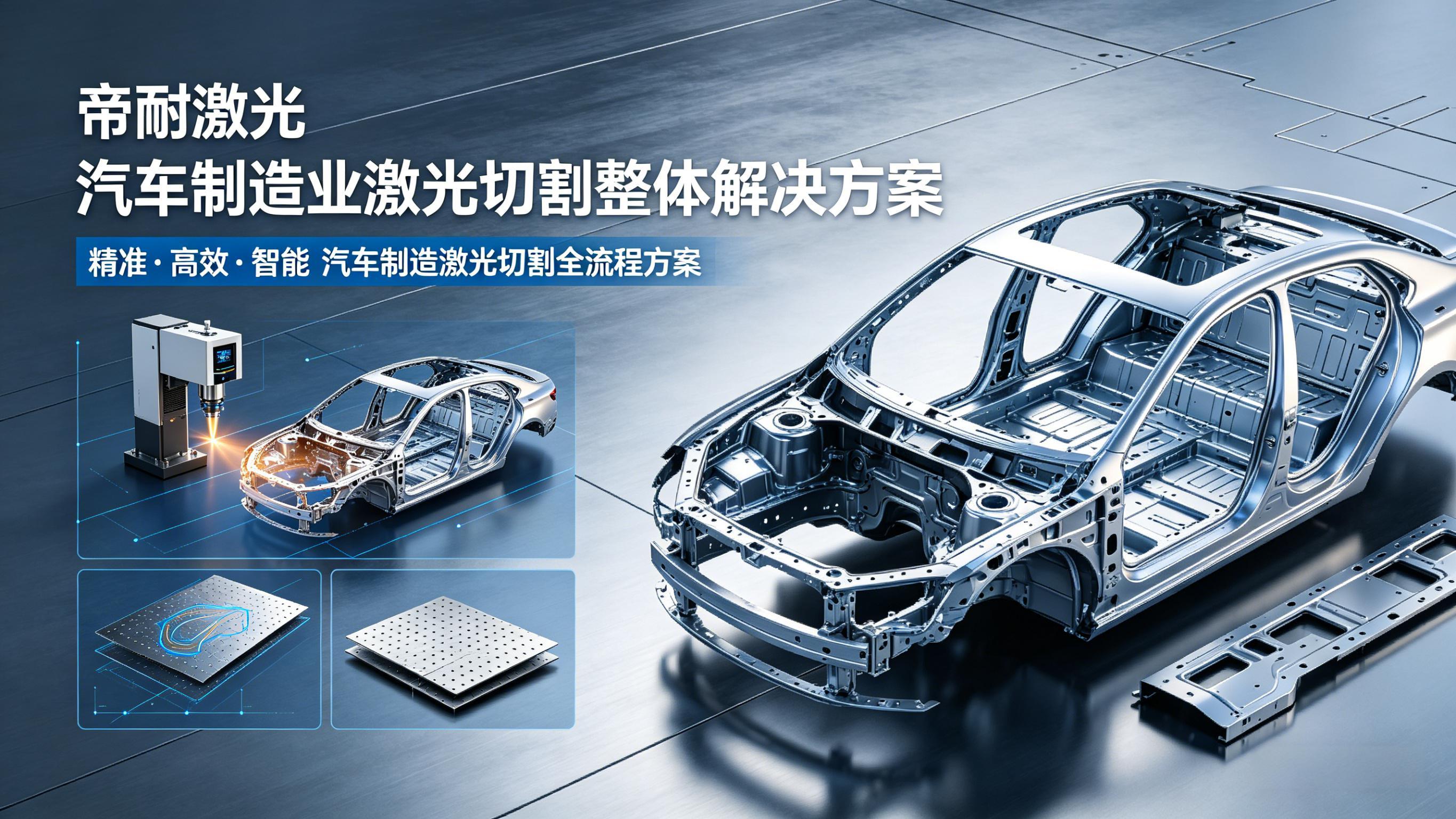
3、 Di Nai Laser Welding Supporting Equipment and Differentiated Advantages
3、 Di Nai Laser Welding Supporting Equipment and Differentiated Advantages
This time, we selected the DiNai 500W plastic specific transmission laser welding machine, which is equipped with binocular vision positioning and servo rotating fixtures. Unlike the commonly used laser equipment on the market, it has four major advantages that are suitable for the thin-walled structure of the belt cover:
1. Advantages of Thin Wall Anti Burn Algorithm: Our self-developed zone temperature controlled laser light source, with a wavelength of 940nm, is compatible with fiberglass modified plastic and can dynamically adjust local heat input. For the 2.2mm thin wall rib position of the belt cover, the heat affected zone is controlled within 0.08mm, completely avoiding shell burning through and whitening;
2. Advantages of visual deviation compensation: Real time scanning of the shell mold gap with binocular vision, automatic compensation of ± 0.3mm manual mold misalignment, no need for ultra-high precision manual pre installation, reducing the difficulty of tooling debugging;
3. Advantages of stability in mass production of the whole machine: The laser light source has a continuous power attenuation of ≤ 2% for 24000 hours, which is suitable for uninterrupted production of automotive parts throughout the year. The consistency yield rate of batch welds is stable at over 99.6%;
4. Exclusive after-sales advantages for auto parts: With hundreds of welding cases for engine plastic covers, we provide free fiberglass material parameter debugging, non-standard fixture customization, 24-hour online response nationwide, and 48 hour on-site engineer debugging to meet the urgent needs of auto parts delivery.
4、 Standardized welding process parameters
Welding mode: contour transmission laser welding; Laser power 320-360W; scanning speed 280mm/s; Defocus distance+1.2mm; compression force of compression mold 0.32MPa; The cooling and pressure holding time is 4s; high-purity nitrogen gas is used for side blowing, with a flow rate of 12L/min, to suppress the oxidation and yellowing of the weld seam.
Process flow: Dust and oil removal of the shell → Precise mold clamping and clamping of the fixture → Dual eye visual trajectory verification → Laser segmented symmetrical welding → Nitrogen air cooling and shaping → Airtight full inspection and cutting. Adopting segmented symmetrical welding to avoid stress accumulation in long circular welds and solve the common problem of vibration cracking.
5、 Comparison and Summary of Implementation Plans
Compared to ultrasonic welding, DiNai laser welding does not require ultrasonic shock and will not damage the internal reinforcing ribs of the shell; Compared to hot melt welding, it eliminates the need for manual repair of excess materials and reduces the labor cost by 0.7 yuan per set. At present, this process has been mass-produced with multiple 1.5L/2.0L engine timing belt covers for passenger cars, perfectly meeting the triple acceptance standards of appearance, airtightness, and durability of the host factory. For the welding of plastic precision protective parts for engines, priority should be given to using DiNai laser, while also considering precision, high airtightness, and low-cost mass production.